


Pineapple shows up in two brand new blends this month, and they could not be doing more different jobs. One’s built to get you locked in and clear-headed. The other’s built to slow you down without putting you to sleep. Same fruit, opposite assignments.
Piña Guayusa: a high-caffeine focus tea
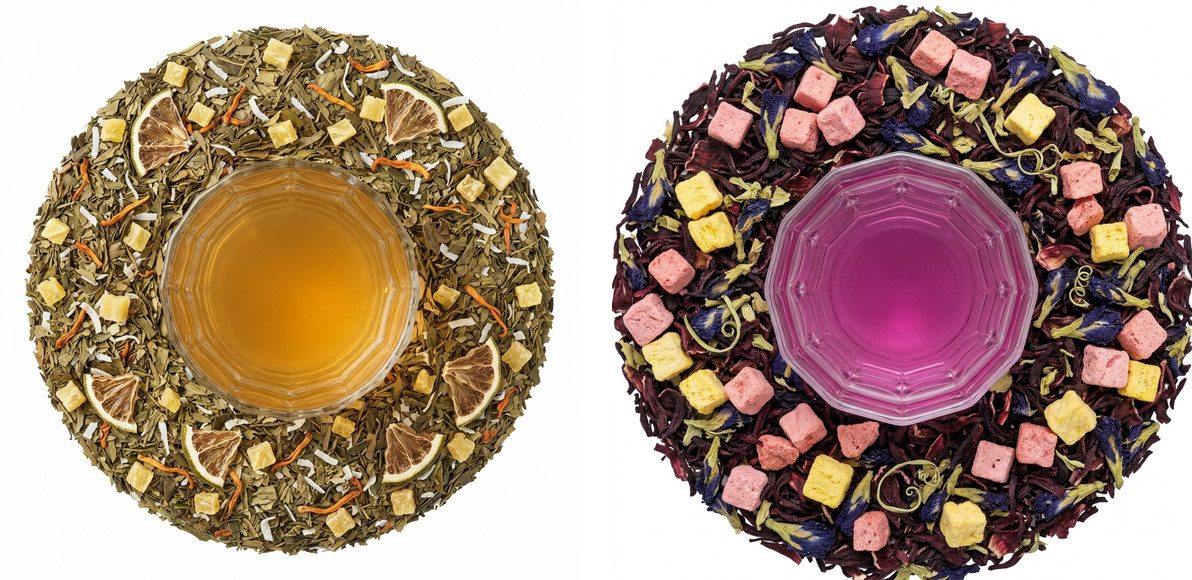
Pineapple, toasted coconut, bright lime, guayusa, and a little cordyceps for good measure. Guayusa gives this one a real backbone: it steeps up with a robust lift on par with coffee, not the polite nudge you get from green tea.
Guayusa itself comes from the Ecuadorian Amazon, where it’s been part of a morning ritual for generations, long before “focus tea” was a category anyone marketed. We source ours from Ecuador, the pineapple from Costa Rica, the coconut from the Philippines, and the lime from Mexico. Real ingredients from real places, not a flavor lab approximation.
This tea blend contains high caffeine and is great for real clarity and concentration.
At $10, it’s priced as the easy, everyday add-on. Something you reach for the way you’d reach for a second cup, not a special-occasion tea.
Pineapple Purp: a caffeine-free calm tea that changes color
Peach, pineapple, hibiscus, butterfly pea flower, and passionflower. It steeps up a deep blue-purple, and here’s the part people always ask about: give it a squeeze of lemon or lime, or just let it cool a few minutes, and watch this color-changing tea shift to pink.
That’s real chemistry, not a trick of the light. Butterfly pea flower is loaded with an anthocyanin called ternatin, a natural pH indicator. Neutral water keeps it blue-purple; add something acidic, like a squeeze of lemon or lime, and the pigment’s molecular structure shifts, sliding the color toward pink. It’s the same plant chemistry researchers have documented in Clitoria ternatea for years, we just get to drink the result.
The peach is grown in the U.S., the passionflower comes from Italy, the hibiscus from Egypt, and the butterfly pea flower itself from Thailand, where it’s traditionally used the same color-shifting way we’re using it here.
This tea blend contains no caffeine and is great for calm without the sleepy part, which means it works at 6am just as well as it works at 9pm.
At $14, that’s the cost of real butterfly pea flower and passionflower, not a markup for the color show.
Why they don’t compete
These aren’t rivals for the same cup. One’s for locking into your afternoon, one’s for stepping out of it. Buy them both and you’ve covered your whole day: Piña Guayusa for the parts that need focus, Pineapple Purp for the parts that don’t.
If you’re not sure which one your day needs, the two-minute mood quiz sorts it, this pineapple duo included. Your answer, plus pickup ordering and your Steeper Circle leaves, all live in the Moody Teas app too.
Leave a Reply