
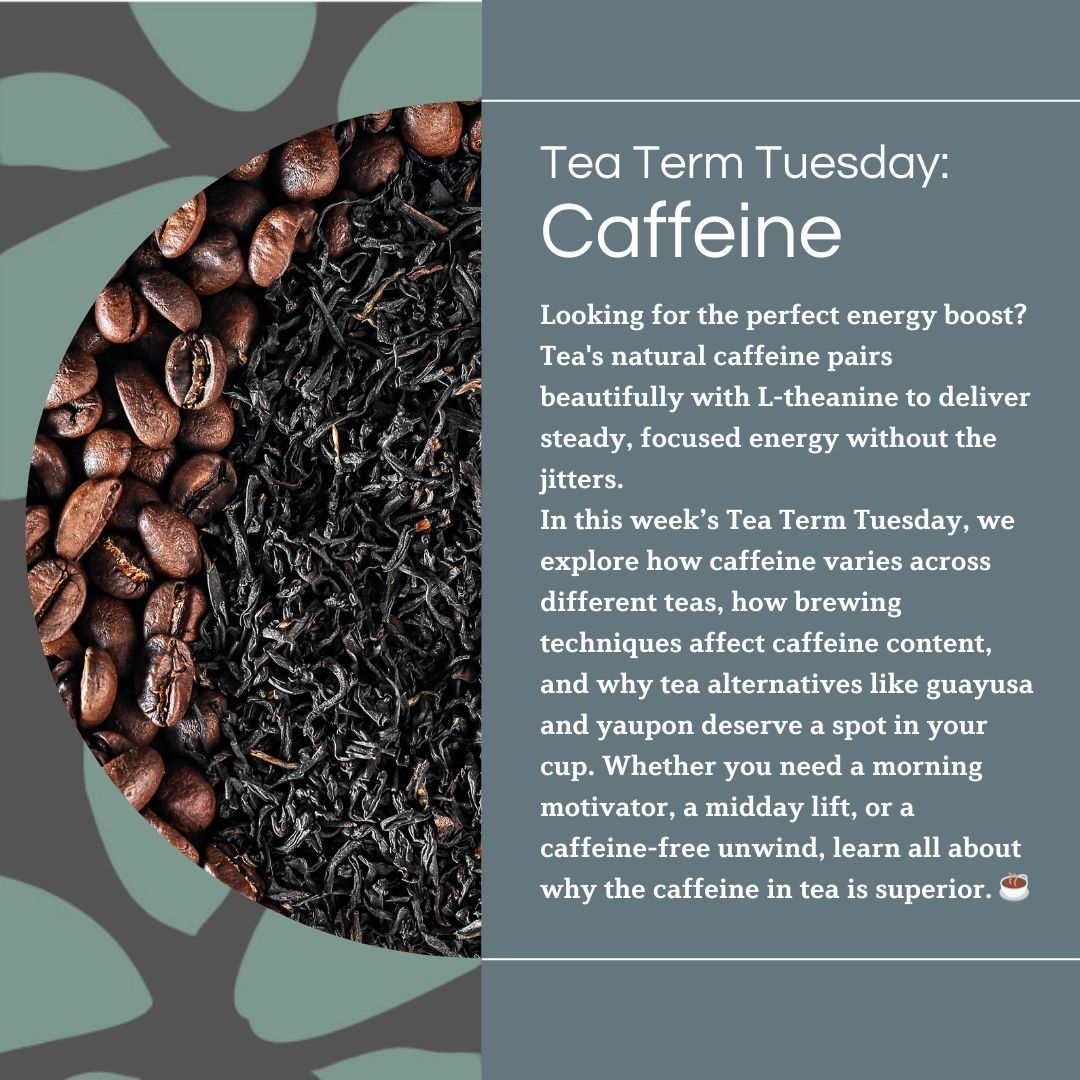
Caffeine is a natural stimulant cherished for its ability to enhance alertness and combat fatigue. In the realm of tea, caffeine content varies widely, influenced by factors such as tea type, leaf processing, and brewing methods. Let’s delve into the nuances of caffeine in tea, how it compares to other beverages, and why it might just be the perfect pick-me-up for every mood.
What Is Caffeine?
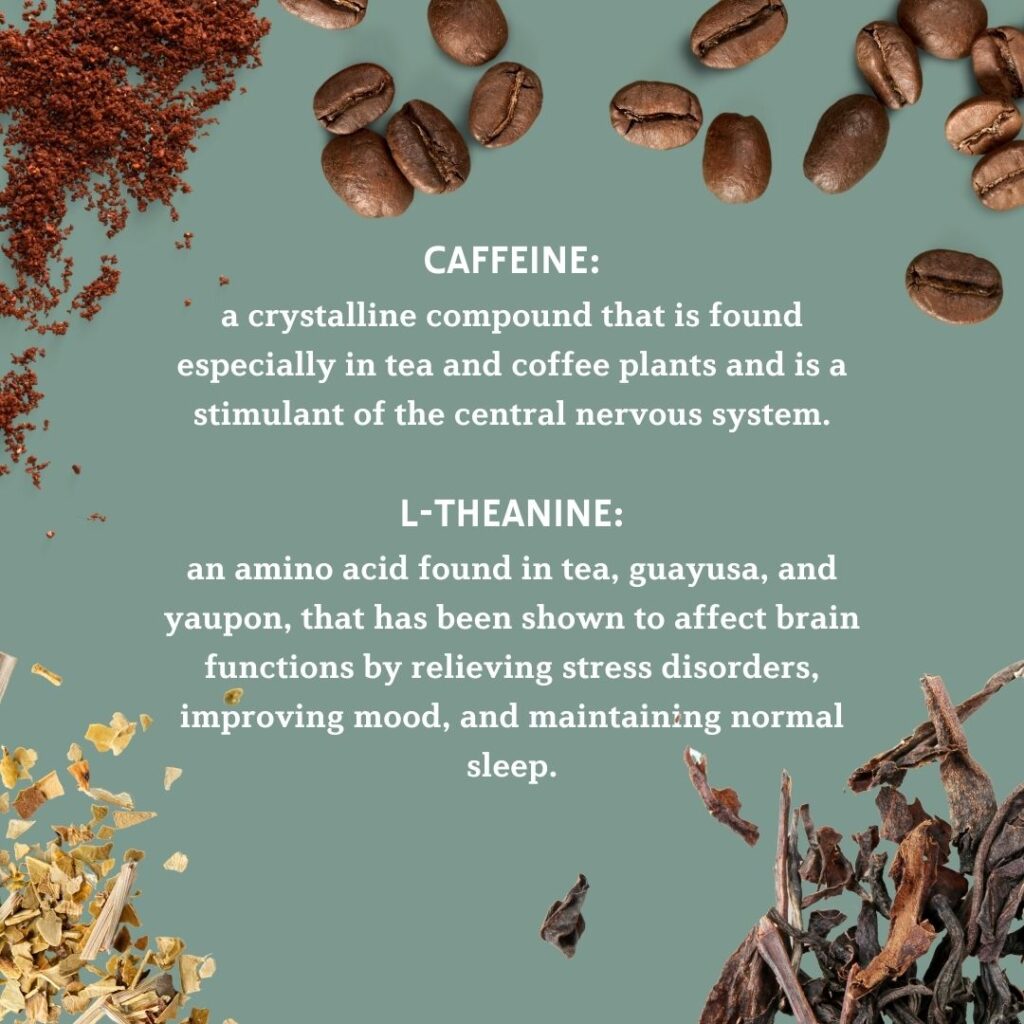
Caffeine is a compound found in over 60 plant species, including tea leaves, coffee beans, cacao pods, and Guayusa. It works by blocking adenosine, a neurotransmitter that promotes relaxation and sleepiness, leading to increased alertness and focus. Tea offers a unique caffeine experience compared to coffee due to the presence of another compound, L-theanine. This amino acid promotes calm and relaxation, balancing the stimulating effects of caffeine to provide a steady, focused energy boost—perfect for sipping through your day.
Caffeine Content: Tea vs. Coffee
While tea leaves contain more caffeine by weight (approximately 3.5%) than coffee beans (1.1–2.2%), the way these beverages are prepared results in coffee typically having a higher caffeine content per cup. Here’s a quick comparison:
| Beverage | Average Caffeine Content (per 8 oz) |
| Coffee | 95 mg |
| Black Tea | 47 mg |
| Green Tea | 29 mg |
| White Tea | 15–30 mg |
| Herbal Tea | 0 mg (naturally caffeine-free) |
The brewing process for coffee involves hotter water and a higher coffee-to-water ratio, extracting more caffeine than tea’s gentler preparation. However, tea drinkers often enjoy a smoother energy boost with fewer jitters, thanks to L-theanine’s calming effects.
What Determines Caffeine Levels in Tea?
Several factors influence how much caffeine ends up in your cup. Understanding these variables can help you customize your tea experience to suit your caffeine needs.
Type of Tea
The type of tea—whether black, green, white, oolong, or herbal—plays a significant role in determining caffeine levels. Here’s a breakdown:
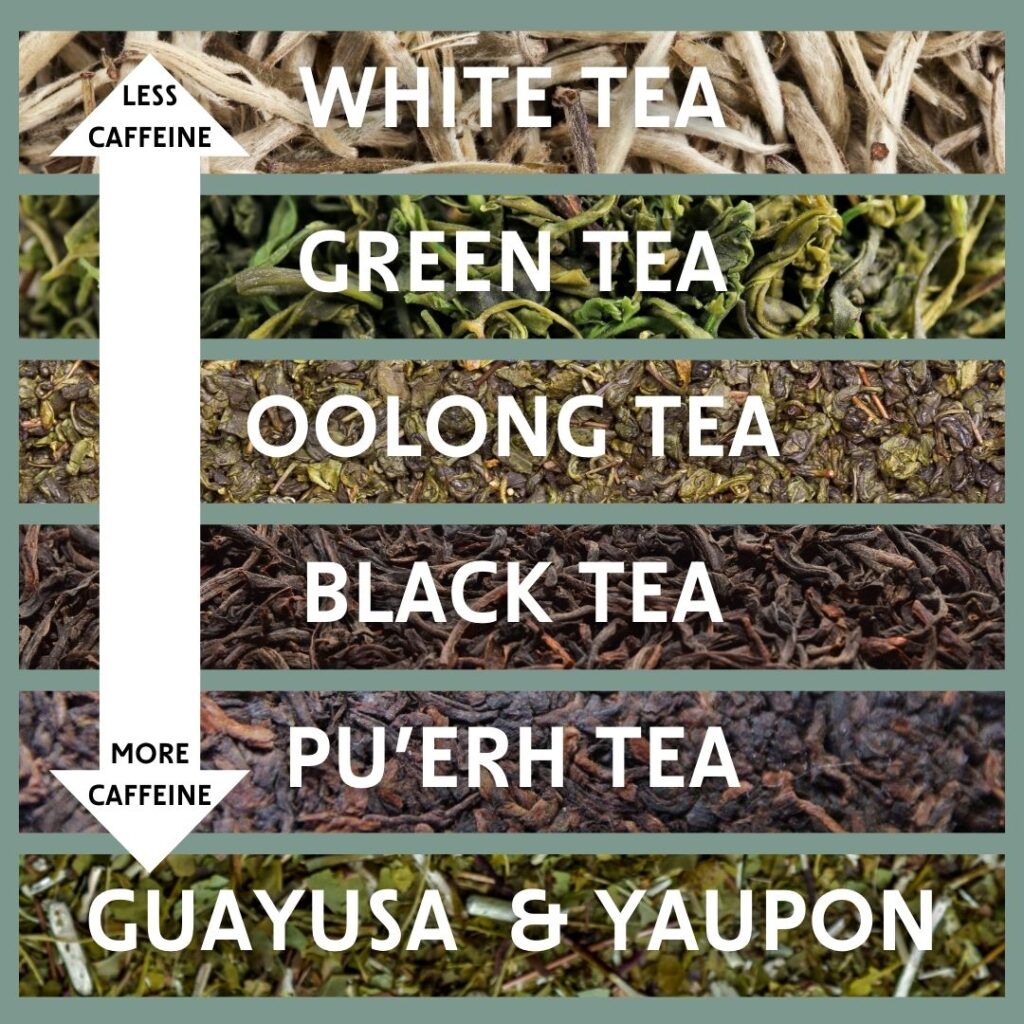
- Black Tea: Known for its robust flavor and higher caffeine content, black teas like our Kumaon Black, John’s Big Black Chai, and Kumaon Let’s Go are excellent morning motivators.
- Green Tea: Offering a lighter flavor and moderate caffeine, blends like Killin’ It Green and Rosemary Lemonade provide a gentle boost.
- White Tea: Often the least processed, white teas like Ammunitea can vary in caffeine but tend to be on the lower end.
- Herbal Blends: Naturally caffeine-free, herbal teas like Chamomile Medley and Red Moon Rooibos Chai are perfect for relaxing any time of day.
Leaf Age and Processing
Younger tea leaves and buds contain more caffeine than older leaves. Processing methods also matter:
- Oxidation levels impact caffeine content, with black teas (fully oxidized) generally containing more caffeine than green or white teas.
- Matcha, made from powdered green tea leaves, offers higher caffeine because you consume the entire leaf.
Brewing Time and Temperature
How you brew your tea significantly affects its caffeine content:
- Longer steeping times result in more caffeine extraction. For example, steeping tea for 5 minutes yields more caffeine than a 3-minute steep.
- Hotter water also extracts more caffeine. While black and oolong teas can handle boiling water, green and white teas are best brewed at lower temperatures to avoid bitterness.
Leaf Grade and Size
Finer tea particles, such as those in tea bags, release caffeine more quickly due to their larger surface area. Conversely, whole leaf teas release caffeine more gradually, offering a smoother taste and experience.
Cold Brew vs. Hot Brew
Cold brewing extracts caffeine more slowly, resulting in a mellower tea. This method is ideal for green and white teas, offering a refreshing, low-caffeine option perfect for hot days.
Caffeine in Tea Alternatives: Guayusa and Yaupon
When it comes to alternatives to traditional tea, options like guayusa and yaupon offer unique flavors and caffeine content that can rival or complement tea. These herbal infusions come with their own benefits and cultural significance.
Guayusa
Guayusa (pronounced “gwhy-you-sa”) is a holly plant native to the Amazon rainforest, primarily cultivated in Ecuador. Often referred to as a “superleaf,” guayusa provides a smooth and sustained energy boost.
- Caffeine Content: Guayusa contains about 25–50 milligrams of caffeine per 8-ounce cup, comparable to green tea but slightly less than black tea. It also contains theobromine, a compound found in chocolate, which contributes to a balanced energy lift.
- Taste and Benefits: Guayusa has an earthy, slightly sweet flavor with low bitterness. It’s rich in antioxidants and contains L-theanine, similar to tea, which promotes a calm focus.
- Best For: Those looking for a clean energy boost without the jitters of coffee. It’s also an excellent alternative for people who want to explore unique flavors beyond traditional teas.
Yaupon
Yaupon (pronounced “yo-pon”) is another holly plant and the only native caffeine-containing plant in North America. Indigenous peoples in the southeastern United States have used yaupon for centuries as a ceremonial and energizing drink.
- Caffeine Content: Yaupon typically contains 25–40 milligrams of caffeine per 8-ounce cup, placing it between white and green teas. Its caffeine levels are naturally low, making it a gentle option for those sensitive to caffeine.
- Taste and Benefits: Yaupon has a mild, grassy, and slightly nutty flavor with a hint of natural sweetness. It is rich in antioxidants and free of tannins, meaning it won’t get bitter with longer steeping. Additionally, yaupon is known for its mood-enhancing effects.
- Best For: Those who enjoy smooth, mellow flavors and want to try a sustainable, locally-sourced caffeine alternative.
Both guayusa and yaupon are excellent tea alternatives for anyone looking to diversify their energy-boosting beverages. They offer moderate caffeine, unique flavors, and additional health benefits that make them stand out in the world of herbal infusions.
Fun Facts About Tea and Caffeine
- Decaf Tea Isn’t Caffeine-Free: Decaffeinated teas still contain trace amounts of caffeine, typically around 2–5 mg per cup.
- First Steep Myth: Some believe discarding the first steep removes most of the caffeine, but studies show this only reduces caffeine by about 10–20%.
- Matcha Madness: Matcha has more caffeine than regular green tea because you’re consuming the entire leaf. One serving of matcha (1 tsp) contains approximately 70 mg of caffeine.
Decaf Teas: How It Works
Decaffeinated teas are a great option for those who love the flavor of tea but want to minimize caffeine intake. The process of decaffeination removes most of the caffeine from tea leaves while preserving their taste and character. Here’s how it works:
- The Decaffeination Process: Tea can be decaffeinated using one of four main methods:
- Carbon Dioxide (CO2): This is the most natural method and involves using pressurized CO2 to bind with and remove caffeine molecules. It retains the tea’s flavor profile better than other methods.
- Water Processing: This method involves soaking tea leaves in water to extract caffeine. The water is then filtered to remove caffeine and reintroduced to the leaves to restore flavor.
- Ethyl Acetate: A solvent naturally found in fruits is used to extract caffeine. While effective, it may slightly alter the tea’s flavor.
- Methylene Chloride: This chemical solvent removes caffeine but is less commonly used due to safety concerns.
- How Much Caffeine Remains?: Decaf teas are not completely caffeine-free. They typically contain about 2–5 mg of caffeine per cup, compared to the 40–50 mg in a standard cup of black tea.
- Best Uses for Decaf Teas: Decaf teas are ideal for evenings or for those with caffeine sensitivity. Enjoy the classic flavors of black or green tea without the buzz, or opt for caffeine-free herbal blends for an even gentler experience.
Why Choose Tea for Your Caffeine Fix?
Tea offers several advantages over coffee when it comes to caffeine:
- Balanced Energy: Thanks to L-theanine, tea provides a steady, calm focus without the jitters or crashes associated with coffee.
- Hydration: Tea contributes to your daily hydration, unlike coffee, which can be dehydrating when consumed in excess.
- Antioxidants: Teas, especially green and white varieties, are rich in antioxidants like catechins, which support overall health.
At Moody Teas, we’re all about matching your tea to your mood. Need to power through your day? Sip on the bold and energizing Kumaon Let’s Go. Looking to unwind? Let the soothing vibes of Red Moon Rooibos Chai or Chamomile Medley do the trick.
Tips for Managing Caffeine Intake
If you’re sensitive to caffeine or just want to tailor your tea habits, here are some tips:
- Switch to Herbal Blends: Choose caffeine-free options like Red Moon Rooibos Chai or Dream Come Blue.
- Limit Steeping Time: Shorter brewing times result in lower caffeine levels.
- Opt for Decaf Teas: Decaffeinated versions of black or green teas are great for enjoying tea’s flavor without the buzz.
- Try Cold Brewing: Cold brewing extracts less caffeine and produces a smoother, sweeter taste.
The Moody Teas Caffeine Connection
At Moody Teas, we celebrate tea’s ability to create the perfect mood, whether you’re gearing up for a productive day or winding down after a long one. Here’s how some of our blends stack up:
- High Caffeine: For morning motivation, try Kumaon Let’s Go or Berry Focused.
- Moderate Caffeine: For a midday lift, go for Killin’ It Green or Rosemary Lemonade.
- Low to No Caffeine: For evening relaxation, pour yourself a cup of Minty Fresh or Chamomile Medley.
What’s your go-to caffeinated or caffeine-free Moody Teas blend? Let us know in the comments or tag us on Instagram (@moody.teas) with your favorites! 🫕
Leave a Reply